

Last Updated: April 22, 2026
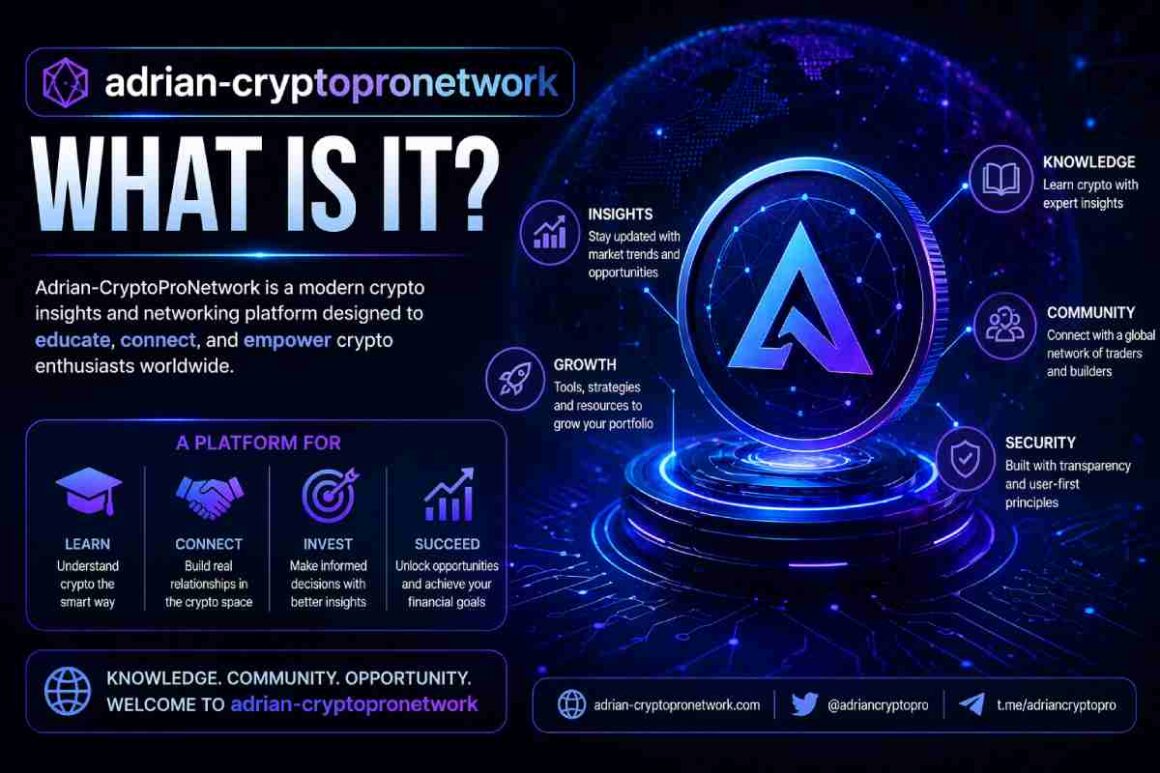
You searched for Adrian CryptoProNetwork because you wanted clarity — not another article stuffed with buzzwords like “AI-powered” and “blockchain ecosystem.”
The crypto space is loud. Everyone is an expert. Every platform promises returns. And figuring out who to trust feels nearly impossible when you’re just getting started.
Here’s the truth about Adrian CryptoProNetwork — no hype, no affiliate spin — so you can make a smarter decision in the next five minutes than most people make in five months.
Adrian CryptoProNetwork: Real Trading Platform or Overhyped Content Site? The No-Nonsense 2026 Breakdown
Table of Contents
Quick Summary
- Adrian CryptoProNetwork is a crypto blog, not a trading platform. The live site publishes articles — there’s no trading interface, no live charts, no bot you can actually run.
- A lot of the “reviews” ranking on Google are written by affiliates, not independent editors. Read them with that in mind.
- Third party trust services have rated the domain with below average scores. Not necessarily a scam but useful to be aware of prior to spending.
- The free content covers basics reasonably well. If that’s all you use it for, the risk is low.
- For actual trading, stick to regulated exchanges. Binance, Coinbase, Kraken — platforms you can verify against a regulator’s list.
Let me be straight with you from the start. When you search Adrian CryptoProNetwork, what you find is mostly a wall of affiliate articles telling you it’s the next great thing in automated crypto trading. Almost none of those articles disclose that they earn a commission if you click through and sign up.
That’s the first problem. The second is that the platform itself — cryptopronetwork.com — doesn’t actually do what those articles say it does.
So before you spend any money, or share any account details, here’s what you actually need to know.
So What Is Adrian CryptoProNetwork, Exactly?
Go to cryptopronetwork.com right now and you’ll see a blog. There are articles about Bitcoin, Ethereum, DeFi, NFTs, Web3 marketing, altcoins. The byline on most posts reads “Adriana Waters.” That’s it. There’s no dashboard to log into, no chart tool, no bot running in the background.
Dozens of promotional articles describe it as a “blockchain-powered trading platform with AI tools and automated execution.” None of that appears to be true based on what’s actually on the site. The gap between what’s marketed and what exists is, frankly, wide.
This kind of mismatch is common in the crypto space. A content creator builds a blog, affiliate marketers write glowing “reviews,” those reviews rank on Google, and suddenly the blog is being described as a full-featured trading platform. The site owner may not even be responsible for all of that — but the confusion still costs real people real money.
Who Is “Adriana Waters”?
Persona-led crypto brands are everywhere. It’s a proven strategy: pick a name, produce consistent content, build a following on Telegram or YouTube with free analysis, then eventually launch a paid community. Vitalik Buterin did it for Ethereum. Plenty of less credible people do it too.
The difference is verifiability. Vitalik’s credentials are public record. Adriana Waters’s background, qualifications, and real identity haven’t been publicly verified anywhere we could find. That doesn’t mean the person doesn’t exist or isn’t knowledgeable — it just means you’re trusting a brand, not a person with a documented track record.
What the Site Actually Offers vs. What Gets Advertised
Here’s a straightforward comparison based on what we found on the live site versus what affiliate content claims:
| Feature | What’s Actually There |
| AI trading bot | Not on the site. Promotional claim only. |
| Automated trade execution | No interface for this exists on cryptopronetwork.com. |
| Live price data / charts | Absent. No real-time tools visible. |
| Copy trading | Described in affiliate content, not present on the site. |
| Blog / educational articles | Yes — this is the actual product. |
| Market commentary | Yes — regular posts on trends and crypto news. |
| Paid membership tiers | Referenced in some sources at $100+/month or multi-thousand lifetime. Verify before paying. |
If you read that table and feel like you were almost misled — you’re not alone. This is exactly the frustration that gets people burned in crypto.
Who Should (and Shouldn’t) Use Adrian CryptoProNetwork
It’s probably fine for you if:
- You’re just starting out and want plain-English articles on how Bitcoin or DeFi works.
- You’re consuming free content only and not handing over any payment details.
- You already understand that no blog, guru, or platform can predict crypto prices reliably.
- You use it as one of several sources — not your only one.
Be cautious if:
- You came here via a Google result saying it’s a “legitimate AI trading platform” — that framing is misleading.
- You’re thinking about paying for a subscription based solely on what affiliate articles say.
- You’re new to crypto and looking for a single tool to manage everything. That tool doesn’t exist, and certainly not here.
- Someone referred you and stands to earn a commission from your signup.
Trust Scores, Risk Flags, and What They Actually Mean
A few trust-scoring tools have taken a look at cryptopronetwork.com. ScamAdviser flagged concerns around opaque ownership and domain signals. One analysis put a medium trust score around 61 out of 100, noting possible phishing or spam risk indicators. Another classified it as higher risk.
Here’s what that means practically: it’s not a confirmed scam. Nobody has reported their private keys being stolen. But the transparency is low enough that you shouldn’t hand over money or sensitive data without doing your own verification first.
The FTC has documented over $1 billion in annual crypto-related losses in recent years. A lot of those losses didn’t come from outright theft — they came from people misreading what a platform actually was.
Warning Signs to Watch For in Any Crypto Platform
- Promises of fixed returns or “guaranteed” profits. No such thing exists in crypto.
- Referral structures where you earn more by recruiting others. That’s an MLM, not an investment tool.
- No verifiable regulatory registration. In France, check the AMF’s liste noire directly.
- Team members who can’t be independently verified.
- One thing I‘ve noticed is that there‘s quite a gap between the website that is marketed and the website that actually shows up online.
Myths vs. Facts: Let’s Clear the Air
| What People Assume | What’s Actually True |
| It competes with Binance or eToro as a trading platform. | It’s a content blog. No trading tools have been verified on the site. |
| The AI bot generates consistent profits. | No bot has been confirmed. No trading system produces guaranteed returns. |
| Paying for a subscription improves your results. | Paid tiers mainly fund platform growth and referral structures, not your portfolio. |
| Reviews online are independent opinions. | Most high-ranking articles are affiliate content. Disclosures are often buried or absent. |
| The ‘Adrian’ persona has verified credentials. | No public record of qualifications or trading track record has been independently confirmed. |
How to Use It Without Getting Burned
If you’re going to spend time on Adrian CryptoProNetwork, here’s a sensible approach:
Read. Don’t pay. Not yet.
Go through the free articles. See if the quality holds up. Check whether claims are sourced. Only after you’ve done that should you even consider a paid option — and even then, read the fine print on refunds.
Verify everything independently.
If an article says a particular altcoin is a good bet, check what CoinGecko, Messari, or an AMF-registered advisor actually thinks. One blog isn’t enough to base a trade on.
Never hand over API keys.
Any platform that wants access to your exchange account — especially without clear regulatory standing — is asking for far more than a content platform needs.
Document subscription terms before paying.
Second, if there’s a paid tier, take a screenshot of the terms and check the refund policy; be sure there’s nothing indefinite. (If there’s ambiguity, it’s a red flag.)
Trade on regulated exchanges, full stop.
For actual buying and selling, use platforms with verifiable licences — Binance, Coinbase, Kraken. These are audited, insured in some jurisdictions, and subject to legal oversight.
What You Actually Need to Understand to Survive in Crypto
Here’s an uncomfortable truth: most people who lose money in crypto don’t lose it to hackers. They lose it to bad decisions made without enough knowledge. The Chainalysis 2024 Crypto Crime Report backs this up — a significant share of losses trace back to user error and misinformation rather than technical breaches.
So whether you use this platform or not, these are the things worth actually understanding:
- Let‘s break down how wallets work, from the different types (custodial vs non-custodial) to what a seed phrase is and, critically, why you should *never* screenshot it.
- Exchange Basics: First off we‘re gonna go over what a limit order is, how slippage relates to your wallet and then discuss a quick note about how buying low liquidity coins changes how things can work.
- It‘s much harder than a creator would make it seem, so this will have its nuances. Here are a few to consider as you decide for yourself: market cycles, bitcoin halving cycles, the altcoin season.
- The DeFi risk I know about for years is: impermanent lossand the risk of smart contract exploits. “Yield farming” can get ridiculous APY, for a little while anyway.
- Risk Management That should be your number one concern. Position sizing: not putting more in one asset than you can genuinely afford to lose, whether you end up taking money or making money. Setting up astop-lossto get you out of the trade if the trend reverses.
- Any profits you earn in cryptocurrency are taxable by French tax authorities. This is true regardless of whether or not you acknowledge it exists. Any crypto you trade is taxable by the French government at a flat tax rate of 30%. This isn‘t an option, it‘s a fact of life.
- MiCA compliance: as of 2026, platforms operating in the EU without CASP registration under MiCA are operating outside the law.
For free, well-sourced content on all of this, CoinGecko Learn and Investopedia’s crypto section are genuinely solid. Not exciting, not flashy — but accurate and regularly updated.
5 Mistakes Beginners Make With Platforms Like This
- Taking affiliate reviews at face value
If a site earns money when you click their link and sign up, they have a financial reason to call the platform great. That’s not evil, but it does mean you shouldn’t rely on that review alone.
- Mixing up education and trading signals
If you were reading a random online article about Ethereum then chances are the author knows zero about technical analysis. The difference between reading about Ethereum and a trader recommending a specific trade to buy or sell Ethereum is night and day.
- Going in too heavy, too fast
This one is older than crypto itself. Start small. Get comfortable losing what you put in. Scale up only when you genuinely understand what you’re doing, not just when you feel confident.
- Forgetting about fees
Trading fees, gas fees, withdrawal fees, conversion spreads — they add up fast, especially on smaller positions. Always factor in total cost before you enter a trade.
- Not checking the regulatory status
In France, the AMF publishes a blacklist of unauthorised platforms. It takes two minutes to check. Most people don’t bother, and some of them regret it.
FAQ — What People Actually Want to Know
Is Adrian CryptoProNetwork a legit trading platform?
No, not in the way it’s often described. It’s a blog that publishes crypto content. It doesn’t have a verified trading interface, live execution tools, or regulatory registration as far as we could establish.
Can you actually trade crypto on CryptoProNetwork.com?
Not on the live site as it stands. If you want to buy and sell crypto, use a regulated exchange. Don’t rely on what promotional articles say — check the site itself.
Who is Adrian Waters?
Adrian Waters is the name credited on most articles on the site. Their real identity, qualifications, and professional background haven’t been independently verified.
Is it safe to use?
Reading the free articles carries low direct risk. Paying for a subscription or sharing personal/financial data is riskier — trust scores are below average and transparency is limited. Do your own checks first.
Does the platform have an AI trading bot?
Promotional articles claim it does. The actual website doesn’t show one. Until that feature appears and can be independently verified, treat the claim as marketing.
What are better alternatives for learning about crypto?
CoinGecko Learn, Investopedia, Messari and the official white papers for Ethereum or Bitcoin are all free, reliable, are up-to-date and authors have credible references to back their claims.
Bottom Line on Adrian CryptoProNetwork
Here’s where we land. Adrian CryptoProNetwork is a crypto content blog. Some of the free articles are a decent starting point for beginners. That’s genuinely about it.
The discrepancy between the site as it exists and how it is represented on the web is a serious issue not because we have proof that the site owner has malicious intent, but because it fools people into believing they are getting a far more advanced service than a blog.
Crypto in 2026, especially in France and the EU has tougher rules than it did as recently as two years ago. The AMF is actively enforcing. Any platform touching real money needs real registration. Adrian CryptoProNetwork, as best we can tell, doesn’t meet that bar.
Use CoinGecko Learn for free education. Use Investopedia’s crypto guides for grounded analysis. And for actual trading, find a platform that shows up on a regulator’s approved list. That’s the honest advice. No affiliate link attached.
Disclaimer: This article is for informational purposes only and does not constitute financial or investment advice. Cryptocurrency carries significant risk of loss. Always consult a qualified financial adviser before investing.