

Last Updated: April 15, 2026
Getting your book into readers’ hands requires far more than uploading a file to one platform. Distribution is the crucial step between production and sales, determining where and how readers discover and purchase your work. Self-published authors who master distribution strategies reach significantly larger audiences than those relying on a single sales channel.
Many first-time authors believe their job ends once their book is published. In reality, distribution is where the real work begins. Your book might be brilliant, but without proper distribution, few readers will find it. Strategic distribution planning ensures your book reaches every potential reader, regardless of where they prefer to buy books.
Table of Contents
Understanding Distribution Channels
Distribution refers to the systems and platforms through which readers access your book. Different channels serve different audiences and offer varying advantages. A comprehensive distribution strategy utilises multiple channels simultaneously.
Direct sales through your author website offer the highest profit margins and direct customer relationships. However, most readers prefer purchasing through established retailers. Major platforms like Amazon command massive traffic and reader trust. Independent bookstores provide crucial physical presence. International retailers expand your addressable market.
Each channel requires different approaches. Amazon has specific requirements and algorithms. Independent bookstores prefer working with distributors. Libraries need ISBN registration and specific metadata. International markets demand regional distribution partners.
What are the major book distribution channels?
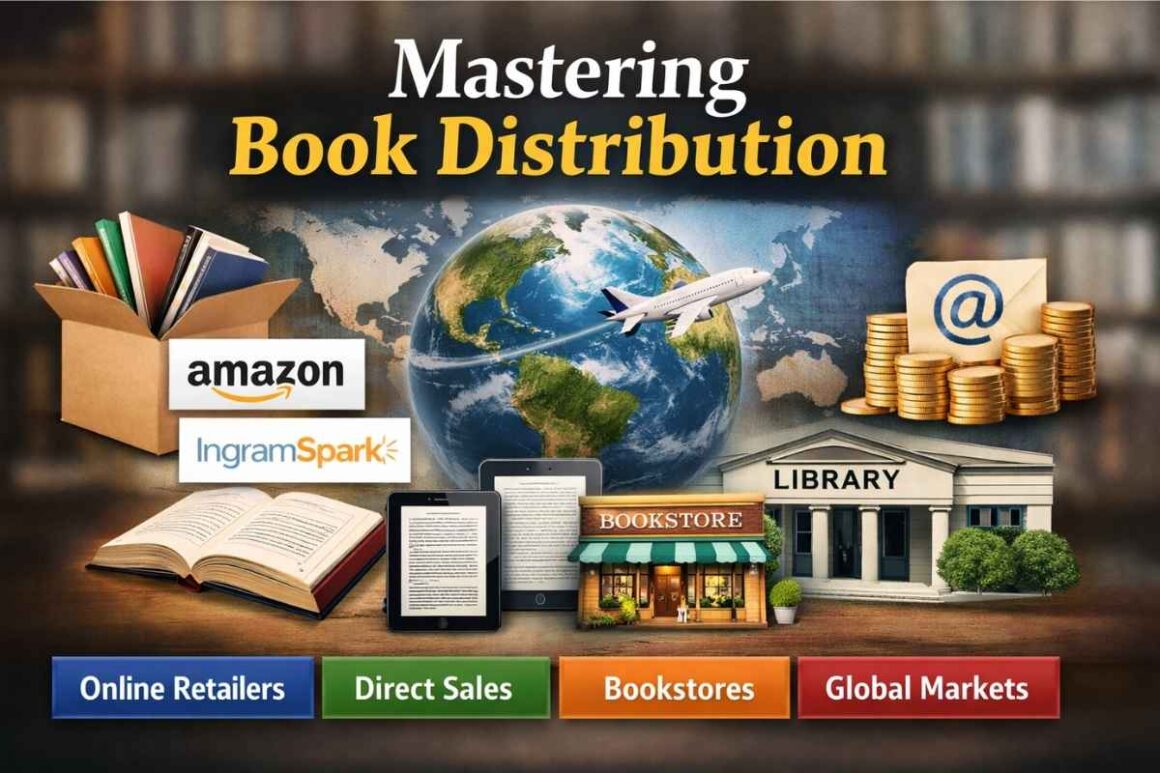
Amazon KDP dominates digital sales globally. IngramSpark provides print distribution to bookstores, libraries, and online retailers. Smashwords and Draft2Digital offer multi-retailer eBook distribution. Direct-to-reader sales through your website build customer relationships. International distributors expand global reach. Physical bookstore placement requires specialised distributors.
Maximising Amazon Distribution
Amazon controls approximately 50% of eBook sales and a substantial portion of print book sales. For most self-published authors, Amazon represents the primary revenue source. Understanding Amazon’s algorithms and requirements maximises visibility and sales.
Amazon KDP (Kindle Direct Publishing) offers straightforward eBook publishing and print-on-demand capabilities. The platform provides category selection, keyword optimisation, and targeted advertising opportunities. Amazon’s algorithm favours books with strong sales velocity, customer reviews, and engagement metrics.
KDP Select, Amazon’s exclusive distribution programme, offers additional visibility through the Kindle Unlimited subscription service. Authors choosing exclusivity forgo other retailers but gain access to Kindle Unlimited’s substantial reader base. This decision depends on your marketing strategy and author goals.
Should you enrol in KDP Select exclusivity?
KDP Select works well for genre fiction authors targeting voracious readers who consume multiple books monthly. It limits flexibility and restricts distribution but offers visibility advantages. Evaluate your marketing capabilities and audience before committing to exclusivity. Non-exclusive distribution provides flexibility to test multiple platforms.
Leveraging Print Distribution Networks
Print distribution extends your reach beyond online retailers. Bookstores, libraries, and other physical retailers require distribution through established networks rather than direct author relationships.
IngramSpark provides global print distribution through its extensive network. The platform reaches thousands of bookstores, libraries, and online retailers. However, Ingram’s wholesale discount requirements reduce author profits compared to direct sales. Understanding these economics ensures realistic pricing strategies.
Baker and Taylor, another major distributor, serves libraries and specialty retailers. Different distributors serve different markets. Some authors work with multiple distributors to maximise coverage. Book Distribution strategies require understanding various platforms and their unique advantages for reaching different reader segments.
How do you decide between print distributors?
Compare the retailers each distributor reaches, their wholesale discount requirements, royalty structures, and reporting capabilities. IngramSpark reaches the broadest network but requires steeper discounts. Smaller distributors serve niche markets. Many authors work with multiple distributors to optimise coverage and profit margins.
Global Expansion and International Distribution
English-language books enjoy substantial international demand. Expanding distribution beyond your home country dramatically increases potential sales. However, international distribution introduces complexity around currencies, shipping, and regional preferences.
Amazon provides global reach through localised storefronts in multiple countries. Your book automatically appears in various Amazon territories, though pricing and visibility vary by region. International print distribution requires partnering with regional distributors who understand local markets and bookstore relationships.
Translation opens entirely new markets. Translating your book into major languages like Spanish, German, French, or Mandarin accesses millions of additional readers. However, translation requires substantial investment and publishing locally in each market.
How difficult is international book distribution?
Digital distribution through Amazon and other platforms enables global sales relatively easily. Physical distribution requires regional partnerships and understanding local market conditions. Pricing strategies must account for regional purchasing power and currency fluctuations. Start with digital distribution, then expand physical presence in high-demand regions.
Building Direct-to-Reader Sales
Whilst platforms like Amazon provide reach, direct sales maximise profits and build customer relationships. Many successful authors generate 20-30% of revenue through direct sales channels.
Your author website provides the foundation for direct sales. An email list enables promotional announcements and exclusive offers. Social media builds community and drives traffic to your shop. Special editions, signed copies, and exclusive bundles create added value for direct purchasers.
Direct sales require investment in shop infrastructure and marketing. However, the profit margins justify these costs. Customers purchasing directly at full price generate three times the profit compared to Amazon sales after platform commissions.
How do you encourage direct sales over Amazon?
Offer special incentives for direct purchases: exclusive bundles, signed copies, bonus content, or limited editions unavailable elsewhere. Build an email list and announce new releases directly to engaged readers. Provide exceptional customer service that builds loyalty. Direct sales require deliberate strategy but offer superior margins and customer relationships.
Frequently Asked Questions About Book Distribution
Do you need multiple distribution channels?
Yes, absolutely. Relying solely on Amazon creates dependency risk and limits market reach. A balanced portfolio including Amazon, independent retailers, libraries, and direct sales maximises exposure and revenue resilience.
How long does it take to get into bookstores?
Direct bookstore placement through personal relationships takes weeks to months. Distribution through aggregators like IngramSpark takes similar timeframes. Independent bookstores may carry your book through local relationships, but this requires active networking and marketing.
What’s the best distribution strategy for new authors?
Start with Amazon and one additional retailer like IngramSpark or Draft2Digital. Build email lists and establish direct sales infrastructure. Add international distribution once you’ve established domestic sales. Expand gradually as your platform grows and revenue justifies additional marketing investment.
How much do distributors take from book sales?
Amazon takes 30-65% depending on pricing. IngramSpark and other distributors typically take 40-50% wholesale discounts. Direct sales through your website involve payment processing fees around 2-3%. Understanding these percentages ensures sustainable pricing strategies.
Conclusion
Distribution separates successful self-published authors from those struggling with obscurity. Whilst writing and production matter tremendously, distribution determines whether readers ever discover your book.
Comprehensive distribution strategies utilise multiple channels, understanding each platform’s strengths and requirements. Amazon provides reach and visibility. Independent distributors ensure bookstore and library placement. Direct sales maximise profits and build customer loyalty. International distribution extends your addressable market exponentially.
Invest time understanding distribution options, setting up multiple channels, and optimising each for maximum reach. When your book appears everywhere readers look for books, success follows naturally.