

Last Updated: April 22, 2026
Something brought you here. Maybe a requirements.txt file listed it. Maybe a colleague’s script imported it and you couldn’t find it anywhere. Maybe you saw it on a download page and the name felt just wrong enough to make you stop and Google it before you touched it.
That instinct? Keep it.
XUD3.G5-FO9Z does not match any known Python package, library, module, or software tool in any public registry as of April 2026. Not on PyPI. Not on GitHub. Not on Conda-Forge. And in the Python ecosystem, where package names follow well-established conventions and discoverability is a core principle — that absence says a lot.
This isn’t a short answer piece. It’s the complete picture: what this identifier could be, what the Python naming rules actually say, how to verify any package you’re unsure about, and what happens when developers skip that verification step in production environments.
Table of Contents
Read This Before Anything Else
- G5-FO9Z is not is not a valid Python package, library, or tool on any public repository in 2026. It doesn‘t exist any where on PyPI, GitHub, or Conda-Forge.
- The string does not match any “standard” python version scheme, nor the standard scheme for Python package names ( this does matter, since almost anything in Python is covered by a set of rules for naming schemes).
- If it was found inside a script, a requirements file or in a download link you also need to know where it came from, so you can run just one line of it.
- This article will guide you through the precise method used to test whether it is true and for you to learn the possible consequences if you fail to do that and to understand the genuine Python identifiers in context.
What Does ‘XUD3.G5-FO9Z Python Software’ Actually Mean?
Let’s break the string apart before we jump to conclusions.
XUD3.G5-FO9Z has three structural features: an alphanumeric prefix (XUD3), a dot separator (.G5), and a hyphen-separated suffix (-FO9Z). In Python package naming, each of those characters carries meaning — and together, this combination raises several red flags.
How Python Packages Are Actually Named
According to PEP 508 — the Python Packaging Authority’s dependency specification standard, valid package names consist of letters, numbers, and hyphens. Dots in a package name typically indicate a namespace package (e.g., google.cloud.storage) — meaning a sub-package within a larger ecosystem. Random alphanumeric strings that combine all three separators (dot, hyphen, mixed case) simply don’t appear in legitimate Python package names.
That’s not a technicality. It’s how the entire Python dependency resolution system works. When pip, Poetry, and conda are looking up a package name, they check a registry. If that name doesn‘t exist in that registry then it won‘t install (cleanly, with an error message not blindly).
So if XUD3. G5-FO9Z was listed in a script, but didn‘t throw any errors, it either came from a private package index, a local path install, or was injected into your environment in some other way. None of those scenarios should be taken at face value.
Four Things This Name Could Actually Be
- A private internal package identifier. Large organizations sometimes run private PyPI mirrors (using tools like Artifactory or devpi) to distribute internal tools. Packages on private mirrors don’t appear in public searches. If your employer or a client’s codebase uses this, your IT or DevOps team can confirm it.
- A build artifact string. CI/CD pipelines and build systems sometimes generate identifiers for compiled artifacts, wheel files, or release candidates. These strings can look exactly like this — they’re machine-generated, not human-readable package names.
- A mislabeled or corrupted dependency. Requirements files that were hand-modified, falsely merged, or produced by a broken tool can occasionally be filled with garbage strings. It is infrequent that it occurs, but it occasionally does. This is most often problematic in older legacy work.
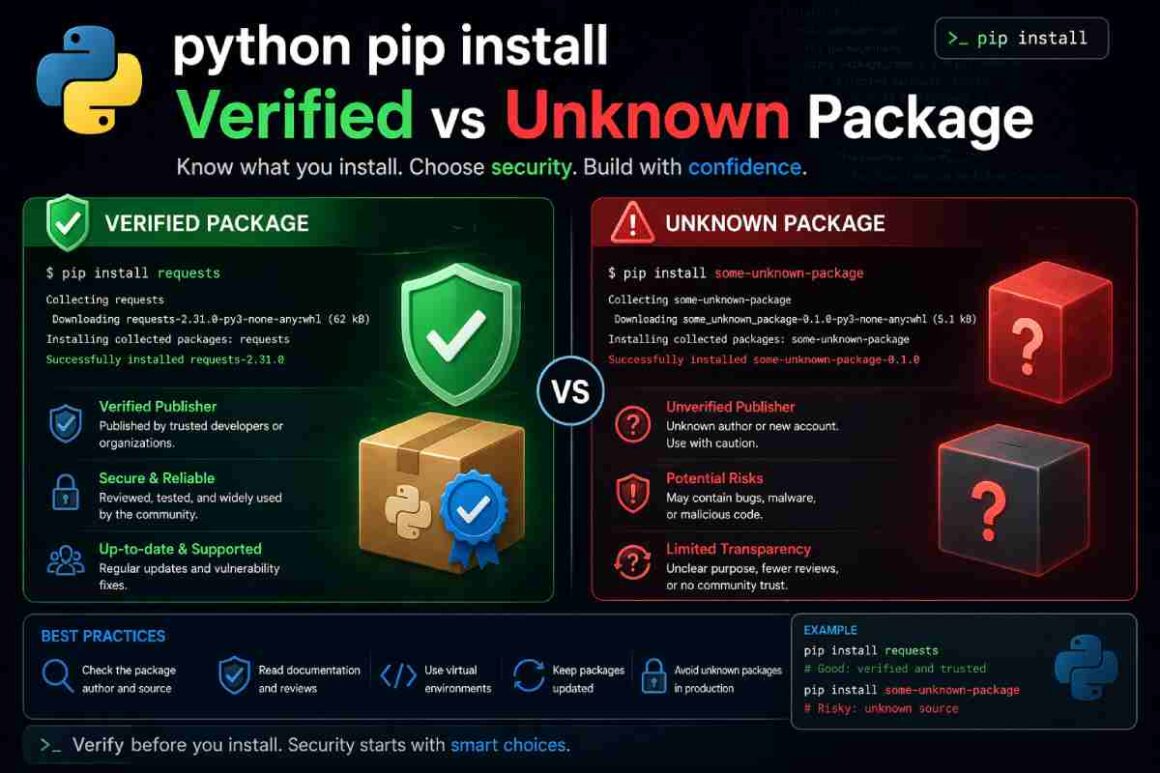
- Something that shouldn’t be trusted. Package confusion attacks — where attackers publish packages with names similar to legitimate ones — are an active and documented threat vector. In 2023, researchers uncovered more than 22000 malicious packages on the public registries. A name so peculiar should be checked first.
Who’s Reading This, and Why It Matters for You Specifically
The answer changes depending on where you found this string.
If you’re a developer who found it in a requirements file or an import statement: your priority is confirming the package source before running any code. Don’t install first and investigate later — that order gets reversed in security incidents.
If you’re a DevOps or security engineer reviewing a dependency list in a CI/CD pipeline: treat this as an unverified dependency until you can confirm its origin in your artifact registry. Flag it for review before the pipeline runs.
If you are a business owner or project manager received this in a vendor‘s deliverable, or in a contractor‘s codebase: inquire of the vendor directly what this package is, and ask for documentation. If they can‘t tell you what it is, that is information you have gained.
For a student or autodidact developer who came across this in tutorial or in a downloaded project: stop before executing it
How to Verify XUD3.G5-FO9Z Python Software — Five Steps, In Order
Don’t shortcut this. The steps build on each other.
Step 1: Search PyPI Directly
Access pypi.org, paste the string and search – this is PyPI (the official python package index). If software is published and it is for Python to use, it‘s here. As of April 2026, you get back no hits forXUD3. G5-FO9Z. This is your starting point.
Step 2: Check Your Environment’s Package Source
Run this in your terminal:
pip show xud3.g5-fo9z
If it’s installed, pip will show you where it came from — including the Location path and the Home-page field. A legitimate package will point to a real website or repository. A suspicious one will point to a temp directory, a local path, or nothing at all.
Step 3: Check Your pip.conf or pip.ini for Custom Indexes
Private package mirrors are configured through pip’s configuration files. Check on Linux / macOS is ~/.pip/pip.conf. On Windows is %APPDATA%\pip\pip.ini. If you see an additional index-url referring to somewhere you don‘t recognize, that‘s where this package might be coming from – and that source also needs verifying.
Step 4: Inspect the Package Contents Before Running It
If you see an installed package you can look at what‘s really the case before you execute a single line of code. Head to the package install directory and grab a read through the source files. Real packages, have human-readable, documented Python there. Real packages don‘t have obfuscated, minified, or compiled-only source without understandable source.
Step 5: Run It in Isolation First
If you do have a good reason to test this but can‘t verify where it is from, do it in a virtualenv. Create one with python -m venv testenv, turn it on, install the package there and see what it does before allowing it near any other environment or mission critical system. Something like Bandit (Python security linter) can run a static analysis of the installed code and raise obvious security flags.
Python Package Risk Assessment: What to Look For
Use this as a quick-reference against any unfamiliar Python package, not just this one:
| Signal | What It Suggests | What to Do |
| Not on PyPI | Private, local, or unofficial source | Confirm with the person or system that introduced it |
| No documentation | Either brand new, internal, or deliberately obscured | Do not use in production without source confirmation |
| Obfuscated source code | Possible malicious intent | Do not install; report to your security team |
| Matches a known package name closely | Possible typosquatting or dependency confusion attack | Compare checksums; verify author identity on PyPI |
| Installed from a URL or local path | May be legitimate; may bypass registry checks | Trace the URL or path to its origin; read the code |
| Throws no import error but isn’t on PyPI | Private index or local install | Check pip.conf for custom index sources |
Why This Matters More in Python Than in Most Other Languages
Python’s openness is one of its greatest strengths. It’s also where a specific category of risk lives.
Unlike compiled languages where distributing malicious code requires significant effort, Python packages can run arbitrary code at install time — not just at runtime. The setup.py file, which runs during pip install, can execute any Python code on your machine with your permissions. This means a malicious package doesn’t need you to import it. Installing it is enough.
The Python security community has documented this extensively. From 2021 to 2023, Sonatype‘s 2023 report revealed that malicious packages in Python grew 315% from year to year. The vector most commonly exploited: developers installing packages they didn’t fully verify.
A package with a strange name, such as “XUD3. G5-FO9Z” undescribed, unknown, no evidence of existing at all tells you something is sure to have to be checked before it gets even close to running on a system.
The danger isn‘t hypothetical. One malicious package, ctx live on PyPI for a few weeks in 2022 scraped environment variables (including AWS keys) from tens of thousands of developer machines before was taken down. It looked innocuous. Nobody expected it.
Three Things Developers Tell Themselves That Get Them Into Trouble
‘It’s in the requirements file, so someone already vetted it’
Requirements files get passed around, copy-pasted, merged from branches, and auto-generated by tools. The presence of a package in requirements.txt is not evidence that a human being verified it. It’s evidence that it was added to a file at some point. That’s a different thing entirely.
‘If it installs without errors, it’s fine’
A successful install means pip found the package and installed it. That’s all it means. It says nothing about what the package does, where it came from, or whether its code is safe. Malware installs cleanly by design.
‘It’s just a dev dependency, so the risk is lower’
Development environments have access to source code, credentials, API keys, and environment variables. In many organizations, developer machines have broader network access than production servers. A compromise of a developer environment is frequently the first step in a supply chain attack — which then reaches production through the pipeline.
Should You Use This Package? Run Through This First
| Question | If Yes | If No |
| Does it appear on PyPI? | Verify author and checksums | Do not install — investigate source first |
| Can you identify who published it? | Read their history and other packages | High risk — do not use |
| Is there readable source code you can inspect? | Review it before running | Treat as potentially malicious |
| Did it come from a verified internal registry? | Confirm with DevOps or IT | Do not install — find out where it came from |
| Does it pass a Bandit static analysis? | Proceed with sandbox testing | Flag for security review |
What the Numbers Say About Unverified Python Packages
This isn’t a theoretical concern for advanced setups. It’s a documented, growing problem in everyday development. The Sonatype 2023 State of the Software Supply Chain report recorded over 245,000 malicious packages discovered across open source ecosystems in that year alone — a number that had nearly tripled in two years.
10.2 Python (via PyPI) was one of the more popular registries for attack during this time, both for the need to publish packages easily, and for the fact that many developers treat requirements files as infallible.
The pattern in almost every documented case is the same: a developer encounters an unfamiliar package, doesn’t verify it, installs it, and the code does something it shouldn’t — whether that’s exfiltrating credentials, modifying other files, or establishing persistence on the host machine.
Ten minutes of verification is not an overreaction to an unfamiliar package name. It’s the minimum.
Situations Where You Absolutely Cannot Skip Verification
- Production Python environments — anything that touches live user data, transactions, or critical infrastructure.
- Applications which use authentication tokens, API keys or database passwords.
- Healthcare and fintech codebases covered by HIPAA, PCI-DSS or other applicable compliance frameworks.
- Open source projects where your dependency list becomes someone else’s dependency list downstream.
- Any educational or team environment where junior developers might replicate your requirements file without questioning it.
Frequently Asked Questions
Is XUD3.G5-FO9Z a real Python package?
Not officially. Shows no windows in PyPI, Conda-Forge, or any recognized python package index in April 2026. If you‘ve found it, trace it to wherever you can before using it.
Could it be a private or internal Python library?
Yes — that’s one legitimate explanation. Companies and research institutions maintain private package indexes. But even then, the package should have internal documentation and a known origin. If nobody on your team can explain where it came from, that’s a problem.
What if pip installed it without errors?
A clean install means the package was found and downloaded. It doesn’t mean the package is safe or legitimate. Check where pip found it by running pip show xud3.g5-fo9z and reviewing the Location and Home-page fields.
How do I check if a Python package is safe?
Check it out on PyPI, browse its author history, review its source, run it with Bandit for static analysis, and even if you‘re still not sure run it in a sandboxed virtual environment away from your project.
What’s a dependency confusion attack?
It‘s an attack where an attacker publishes a package with the same name as one you already have on a public registry (e. G. PyPI). When pip does dependency resolution it may hit the public repository rather than your private one, installing the attacker‘s package. This attack was published in 2021 and is still active.
Final Verdict: What You Should Actually Do About XUD3.G5-FO9Z Python Software
Here’s the straight version.
XUD3.G5-FO9Z Python software doesn’t exist in any public registry. That doesn’t automatically make it dangerous — it makes it unverifiable by default, which in software terms is the same thing as ‘not trusted yet.’
Good software — Python packages included — is findable, documentable, and attributable. You should be able to say who made it, where it lives, what it does, and how to read its source code. If you can’t answer those four questions, you don’t have enough information to use it responsibly.
Run the five verification steps. Check PyPI. Inspect the source. Use a virtual environment if you’re still testing. And if the package came from somewhere you can’t explain — flag it before it goes anywhere near a production environment.